
Artificial Intelligence (AI) has rapidly transitioned from the realm of science fiction to a tangible force reshaping industries and influencing our daily routines. Its transformative potential is undeniable, promising to revolutionize how we work, interact, and perceive the world around us. This article delves into the core concepts of AI, explores its key building blocks, and examines the profound impact it’s having on society, both positive and potentially disruptive.
Defining Artificial Intelligence: Beyond the Hype
At its core, Artificial Intelligence refers to the capacity of machines and computer systems to emulate intelligent behaviors, effectively performing tasks that typically require human cognitive abilities. This encompasses a broad and evolving range of technologies, algorithms, and methodologies designed to enable machines to learn, reason, perceive their environment, and ultimately make informed decisions. The primary goal of AI is to replicate human-like cognitive functions, such as intricate problem-solving, sophisticated pattern recognition, nuanced language processing, and complex decision-making processes, often with superior speed, scale, and accuracy.
The dynamic and constantly evolving landscape of AI has led to the emergence of distinct categories, each representing a different level of intelligence and capability:
- Narrow AI (Weak AI): This represents the current state of AI development. Narrow AI excels at specific, pre-defined tasks. It operates within a limited scope, effectively simulating human intelligence to solve a narrowly defined problem. Examples include:
- Chatbots offering customer support.
- Self-driving cars navigating pre-mapped routes.
- Virtual assistants like Siri and Alexa responding to voice commands.
- Language translation software converting text between languages.
- Artificial General Intelligence (AGI) (Strong AI): Often referred to as “Strong AI,” this represents a more ambitious and currently hypothetical level of artificial intelligence. AGI possesses the ability to understand, learn, and apply knowledge across a wide array of tasks, even those it hasn’t been explicitly trained for. In essence, AGI would exhibit a level of cognitive flexibility comparable to that of a human being. Like a child learning and growing, AGI would require continuous input and experiences to develop and refine its abilities over time. Achieving AGI remains a significant challenge, requiring breakthroughs in our understanding of human consciousness and intelligence.
Key Components: The Building Blocks of Intelligent Systems
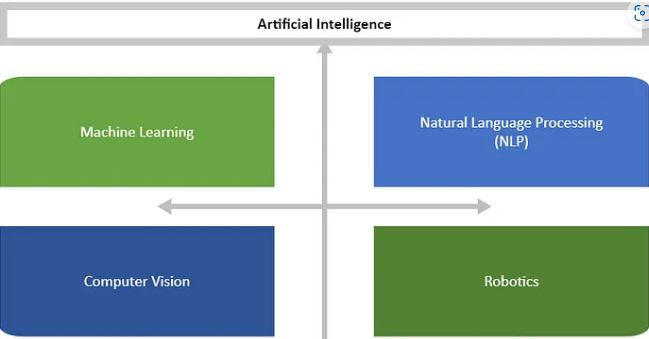
The power of AI stems from the synergistic combination of several core components:
- Machine Learning (ML): As a crucial subset of AI, Machine Learning empowers machines to learn from data without explicit programming. By leveraging sophisticated algorithms and statistical models, machines can analyze vast datasets, identify hidden patterns and correlations, and make data-driven predictions or informed decisions. ML algorithms are constantly refined and improved as they are exposed to new data, allowing them to adapt and become increasingly accurate over time.
- Natural Language Processing (NLP): NLP bridges the gap between humans and machines by enabling machines to understand, interpret, and generate human language, in both written and spoken forms. This capability facilitates a wide array of applications, including accurate language translation, insightful sentiment analysis (determining the emotional tone of text), and robust voice recognition systems, ultimately fostering seamless and intuitive human-machine interaction.
- Computer Vision: This field equips machines with the ability to “see” and interpret visual information from images and videos. By employing complex algorithms, computer vision systems can perform tasks such as:
- Object recognition (identifying specific objects within an image).
- Facial recognition (identifying individuals based on their facial features).
- Enabling autonomous vehicles to navigate their surroundings.
- Assisting in medical diagnostics by analyzing medical images.
- Robotics: Robotics combines AI with physical systems, enabling machines to interact with the physical world. AI-powered robots can perform a wide array of tasks, from simple assembly and logistics operations to complex explorations of hazardous environments and even delicate surgical procedures. The integration of AI allows robots to adapt to changing conditions, make autonomous decisions, and perform tasks with greater precision and efficiency.
The Pervasive Impact of Artificial Intelligence
AI is already transforming numerous sectors, demonstrating its versatility and potential to drive innovation:
- Healthcare: AI is improving diagnostic accuracy through advanced image analysis, personalizing treatment plans based on individual patient data, and accelerating drug discovery through sophisticated simulations.
- Finance: AI is enhancing fraud detection, automating trading algorithms, and providing tailored financial advice to customers.
- Transportation: AI is powering self-driving cars, optimizing traffic flow, and improving logistics operations.
- Entertainment: AI is recommending personalized content, creating realistic special effects, and even composing music and generating artwork.
However, the widespread adoption of AI also raises important ethical considerations and societal concerns, particularly regarding data privacy, algorithmic bias, and the potential for job displacement. Addressing these challenges through responsible development and thoughtful policy-making is crucial to ensuring that AI benefits all of humanity.
The Future of AI: A World of Possibilities
As AI technology continues its rapid advancement, the opportunities for its application are expansive. Breakthroughs in areas like deep learning, reinforcement learning, and neural networks are constantly pushing the boundaries of AI capabilities. We can anticipate the emergence of increasingly sophisticated AI-powered virtual assistants, smarter and more sustainable smart cities, and more autonomous systems impacting various facets of our lives. This transformative era holds the promise of greater efficiency, enhanced productivity, and the ability to tackle complex global challenges in innovative ways.
Conclusion: Embracing the Potential, Navigating the Challenges
Artificial Intelligence represents a remarkable synthesis of machine learning, natural language processing, computer vision, and robotics, creating intelligent systems capable of learning, reasoning, and adapting to complex environments. Its capacity to augment human intelligence and automate tasks across diverse sectors presents significant opportunities for progress and innovation. However, it is imperative that we carefully consider the ethical implications, address societal concerns, and prioritize responsible development and deployment as we embrace the transformative power of AI. By doing so, we can unlock a future where AI serves as a valuable tool for improving human lives, boosting productivity, and addressing some of the most pressing global issues.